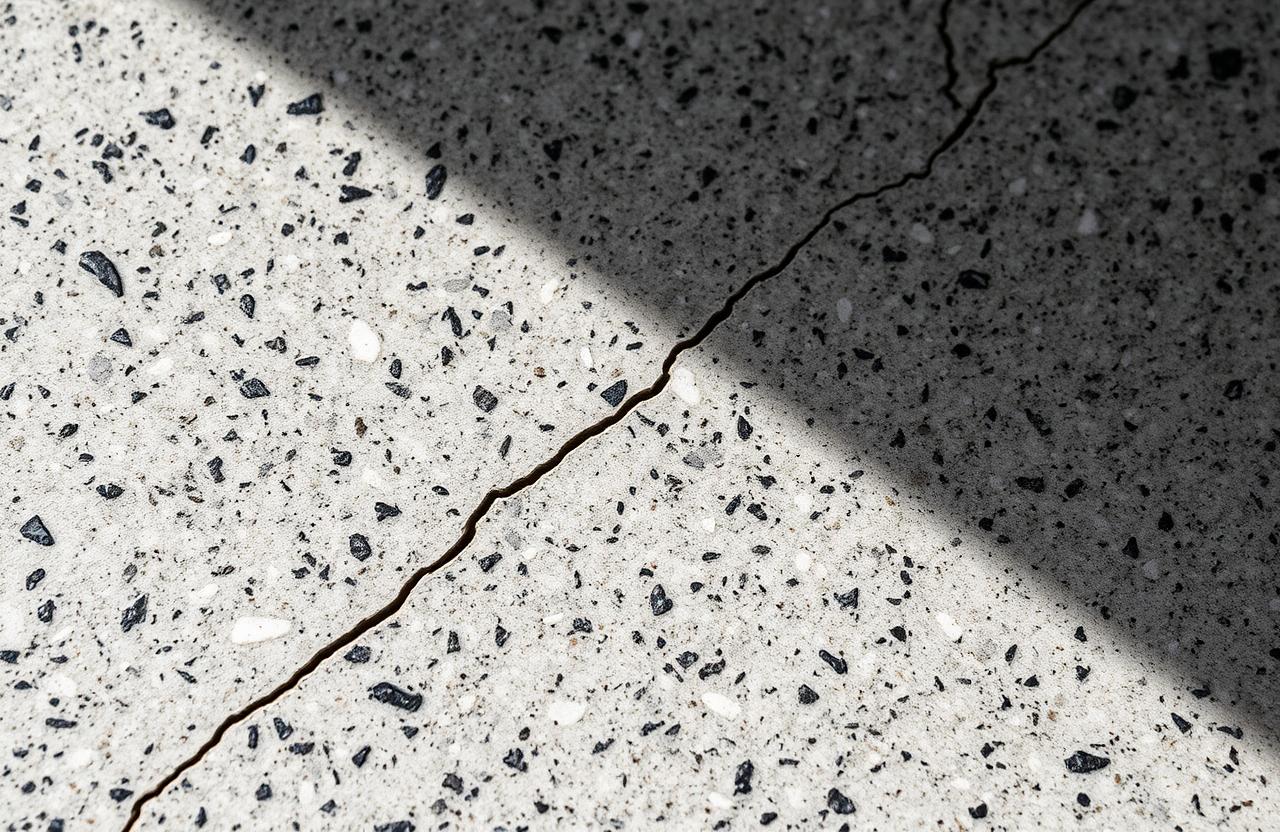
Crack
A line that runs through the stone, sometimes with a visible separation.
How to spot it
- A continuous line that runs through the stone, not just the surface
- May have a visible gap or step where the two sides meet
- Often appears near sinks, cooktops, or unsupported overhangs
Often confused with
Vein
A vein has continuous color and pattern around it; a crack is a clean break.
Surface scratch
A scratch only catches the polish; a crack goes deeper and can grow.
What causes it
Impact, structural stress, thermal shock, or unsupported overhang.
How to repair it
Don't DIY this
This type of damage almost always gets worse with a home repair. Skip to the pro fix — a stabilized small problem is far cheaper than replacing the slab.
Pro fix
- When to call
- Always — cracks grow with continued use and can fail catastrophically near loads or heat.
- Typical cost
- $300–$1,200 to stabilize; full slab replacement is significantly more
- What they'll do
- Inject color-matched epoxy or polyester resin into the crack, clamp, then re-polish the surface.
Do NOT use on this damage
Hardware-store epoxy
Wrong color, wrong viscosity, and rarely UV-stable on stone.
Caulk or silicone
Stays soft, attracts dirt, and traps water that widens the crack.
Heat near the crack
Thermal stress can lengthen the fissure across the slab.
Prevent it next time
- Support overhangs more than 6" with brackets or corbels.
- Use trivets — sudden temperature changes cause thermal cracks.
- Avoid standing or sitting on counters, especially near sinks.
Always test any product on a small, hidden area first. Cost ranges are general estimates and vary by region and stone.