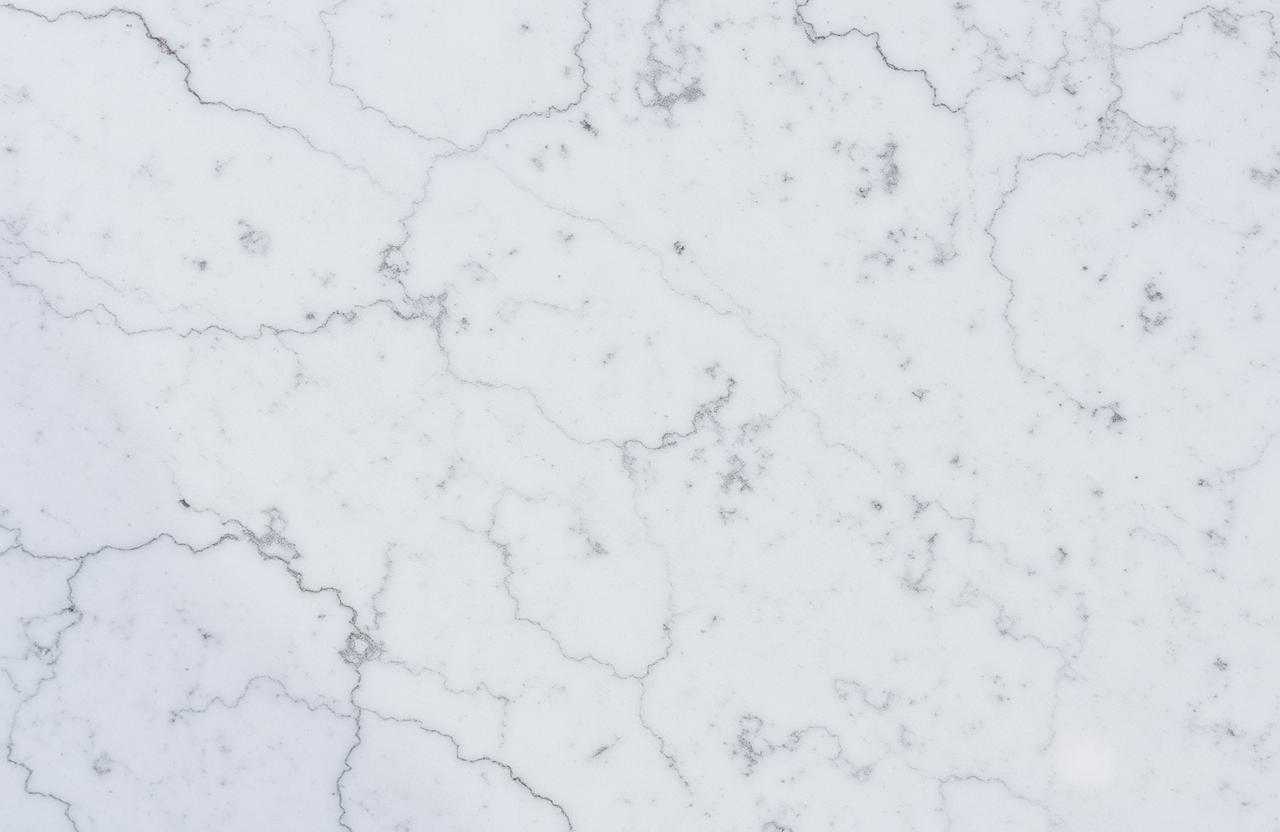
Quartzite
Marble's look, granite's toughness.
True quartzite is a metamorphic sandstone — extremely hard, glassy, and resistant to etching. It often gets confused with marble or with engineered quartz, so verification matters before buying.
Telltale traits
- glassy crystalline veining
- cool to the touch
- very hard surface
Best for
- • Kitchen counters
- • Heavy-use surfaces
- • Backsplashes
Avoid for
- • Buyers expecting zero veining
Cleaning routine
Daily
pH-neutral stone cleaner or warm water with mild soap.
Weekly
Stone-specific cleaner and dry buff.
Deep clean
Poultice for stains; verify true quartzite vs marble before using polishing powders.
Sealing
Yes — Every 1–2 years
Most quartzites benefit from a penetrating sealer.
What to avoid
When to call a pro
Pro help recommended for chips, cracks, or doubt about whether the stone is true quartzite.
Frequently asked questions
Quartzite vs quartz — what's the difference?
Quartzite is 100% natural stone. Engineered quartz is ground stone bound with resin. Quartzite tolerates heat; engineered quartz can scorch.
Does quartzite need sealing?
Most slabs benefit from a penetrating sealer every 1–2 years, though some dense varieties need almost none.
How do I confirm it's true quartzite?
Ask the supplier for a scratch test (a steel knife should not mark it) and an acid test (true quartzite won't etch from lemon juice).