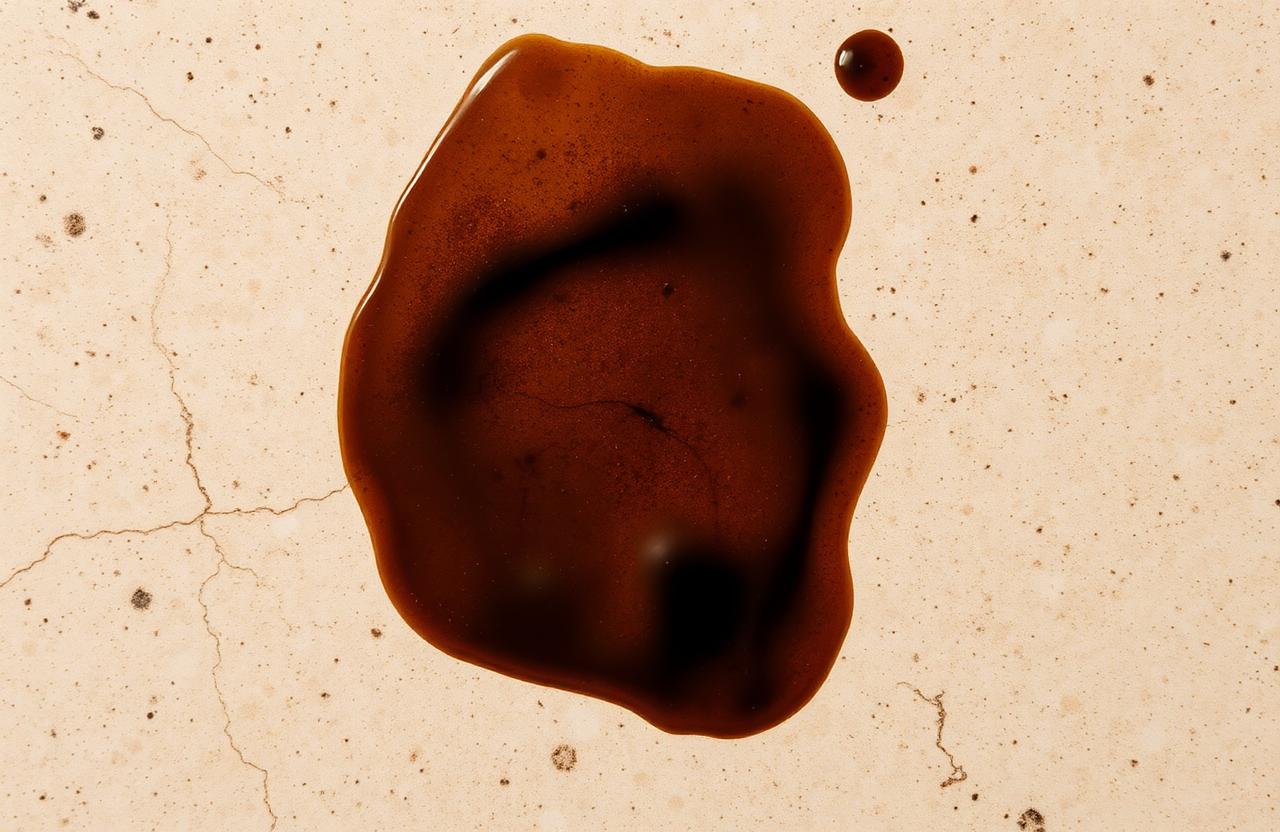
Oil stain
A darker patch that won't wipe off — often greasy-looking with a soft outline.
How to spot it
- Darker than the surrounding stone
- Soft, irregular outline that bleeds outward
- Doesn't lift with normal cleaning
- Often near a stovetop, sink, or dispenser
Often confused with
Etch
Etches are lighter and duller; oil stains are darker.
Wet patch
A wet patch evaporates and disappears within an hour.
What causes it
Cooking oils, butter, salad dressings, or skincare products soaking into a porous, unsealed surface.
How to repair it
DIY fix
DIY moderate 5 minutes hands-on, 24–48 hours dwell
You'll need
- Baking soda
- Distilled water
- Plastic wrap
- Painter's tape
- Plastic spatula
- 1Blot any fresh oil with a paper towel — do not scrub.
- 2Mix baking soda with distilled water to a peanut-butter consistency.
- 3Spread 1/4" thick over the stain, extending 1" beyond its edge.
- 4Cover with plastic wrap and tape down the edges.
- 5Leave 24–48 hours, then gently scrape off with a plastic spatula.
- 6Rinse with distilled water, dry, and reseal the area.
- 7Repeat once if the stain is faded but still visible.
Pro fix
- When to call
- Stain has been there for months, covers a large area, or two poultice rounds didn't work.
- Typical cost
- $150–$400 per stain
- What they'll do
- Apply a stronger solvent-based poultice, sometimes with mild heat, then reseal.
Do NOT use on this damage
Dish soap as a stain treatment
Adds more grease to the porous stone — opposite of what you want.
Bleach
Doesn't lift oil and damages the sealer.
Hot water
Drives the oil deeper into the pores.
Wire brushes
Scratches the surface without removing the stain.
Prevent it next time
- Reseal the surface every 6–18 months depending on the stone.
- Wipe oil splatters from cooking immediately.
- Put a saucer under olive oil bottles and skincare pumps.
Always test any product on a small, hidden area first. Cost ranges are general estimates and vary by region and stone.