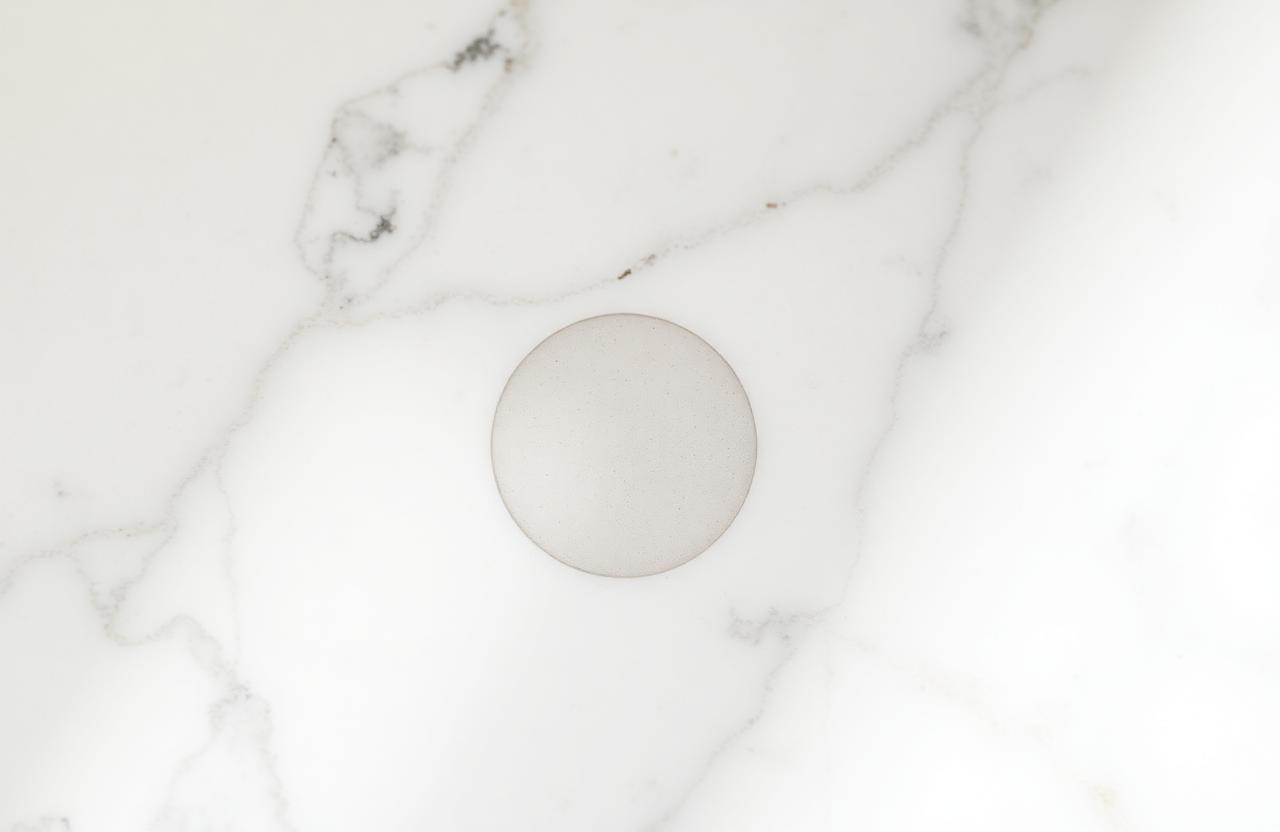
Etch mark
A dull, lighter, often circular spot on an otherwise glossy surface — feels the same to the touch.
How to spot it
- Lighter or duller than the surrounding stone
- Often a circle or splash shape from a spill
- Same texture to the touch — not raised or sticky
- Catches the light differently than a polished area
Often confused with
Stain
A stain is darker than the stone; an etch is lighter and duller.
Water spot
Water spots wipe away with a damp cloth; etches do not.
What causes it
Acidic foods or cleaners (lemon, vinegar, wine, tomato, some bathroom sprays) reacting with calcium-based stone.
How to repair it
DIY fix
DIY moderate 20–40 minutes
You'll need
- Marble polishing powder
- Soft microfiber cloth
- Spray bottle of distilled water
- 1Clean the area with pH-neutral stone cleaner and let it fully dry.
- 2Sprinkle a small amount of marble polishing powder over the etch.
- 3Mist with distilled water to form a paste.
- 4Buff in tight circular motions with a damp microfiber cloth for 2–3 minutes.
- 5Wipe clean and check the gloss — repeat once if needed.
Pro fix
- When to call
- Etches deeper than a fingernail catch, or large patches across multiple slabs.
- Typical cost
- $200–$600 per surface depending on size
- What they'll do
- Wet-hone the area with progressively finer diamond pads, then re-polish to match the original sheen.
Do NOT use on this damage
Vinegar or lemon
These are what caused the etch — more acid makes it worse.
Bleach
Strips sealer and can leave its own dull mark.
Abrasive scouring powder
Removes more polish and widens the dull patch.
Steel wool
Scratches the surface and can leave rust specks.
Prevent it next time
- Wipe acidic spills (citrus, wine, tomato) within 60 seconds.
- Use coasters under glasses and trivets under hot acidic foods.
- Switch to a pH-neutral stone cleaner — toss the all-purpose spray.
Always test any product on a small, hidden area first. Cost ranges are general estimates and vary by region and stone.