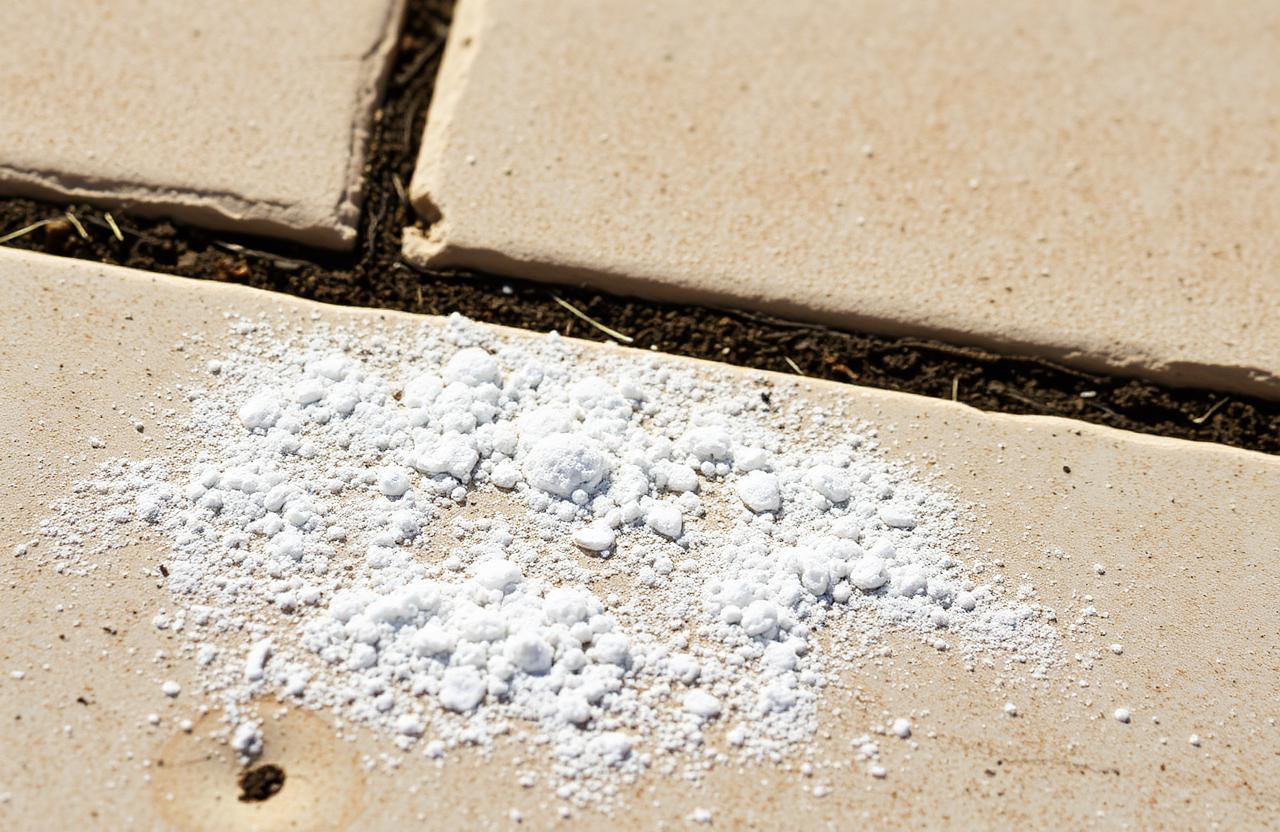
Efflorescence
A white, powdery bloom on the surface — often outdoors or in damp areas.
How to spot it
- White or gray powder that brushes off (at least at first)
- Often appears after rain or in damp seasons
- Concentrated near grout joints, edges, or low spots
Often confused with
Mineral deposits from cleaner
Cleaner residue is uniform across where you sprayed; efflorescence follows moisture.
Mold
Mold is greenish or black, often slimy, and grows in shaded damp spots.
What causes it
Water carrying dissolved salts from below evaporates at the surface, leaving the salts behind.
How to repair it
DIY fix
DIY moderate 20–40 minutes
You'll need
- Soft-bristle brush
- Stone-safe efflorescence cleaner
- Bucket of clean water
- Microfiber cloth
- 1Wait for a dry day — wet stone makes the bloom return faster.
- 2Brush off the dry powder with a soft brush.
- 3If residue remains, apply a stone-safe efflorescence cleaner per the label.
- 4Rinse thoroughly and let the surface air-dry.
- 5Investigate the moisture source if the bloom returns within weeks.
Pro fix
- When to call
- Bloom keeps returning, covers a large area, or stone is shedding/spalling along with it.
- Typical cost
- $200–$1,000+ depending on whether substrate work is needed
- What they'll do
- Identify the moisture path, treat with a specialty cleaner, then seal the substrate or improve drainage.
Do NOT use on this damage
Vinegar or muriatic acid
Strips calcium from limestone, travertine, and marble.
Pressure washing
Drives more water into the substrate and accelerates the cycle.
Topical sealer over wet stone
Traps moisture, causing bigger blooms and spalling later.
Prevent it next time
- Improve drainage so water doesn't pool under or behind the stone.
- Seal the substrate (not just the surface) before installation outdoors.
- Direct sprinklers away from stone walls and paving.
Always test any product on a small, hidden area first. Cost ranges are general estimates and vary by region and stone.